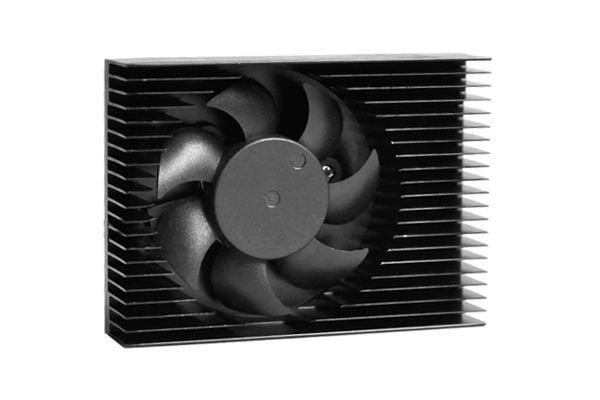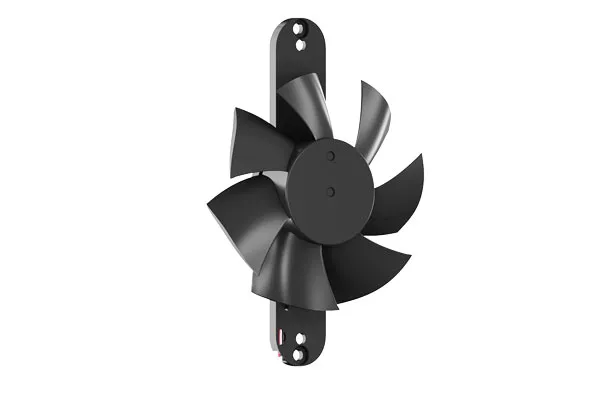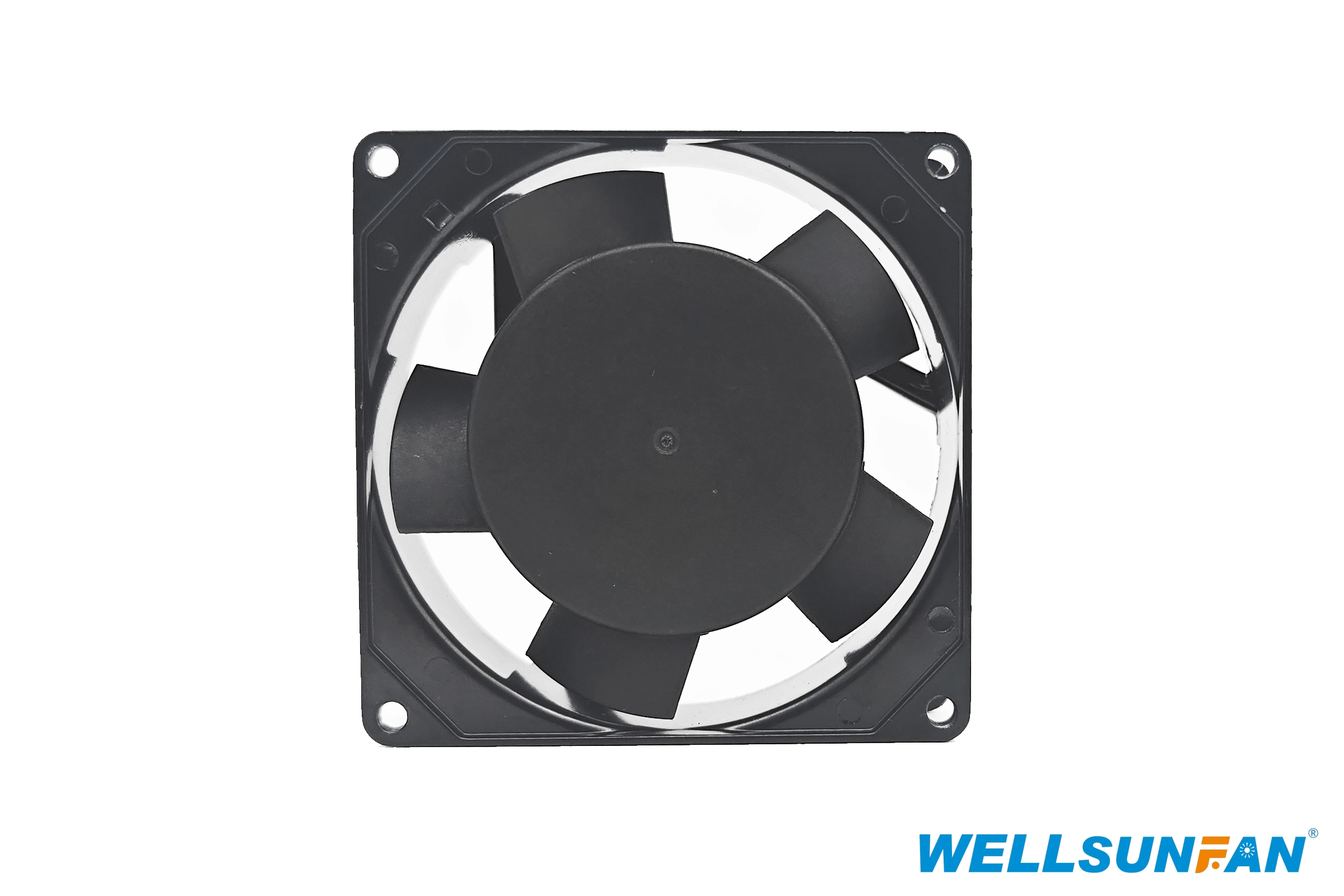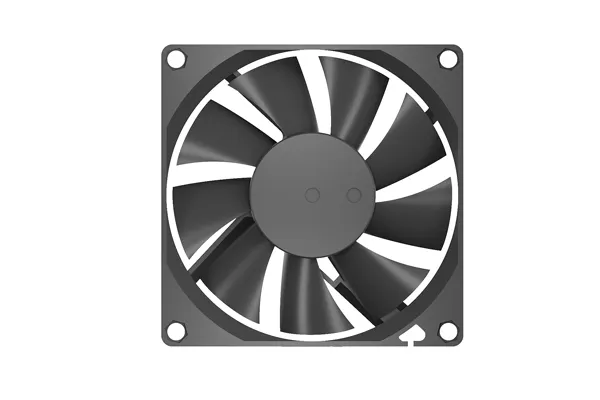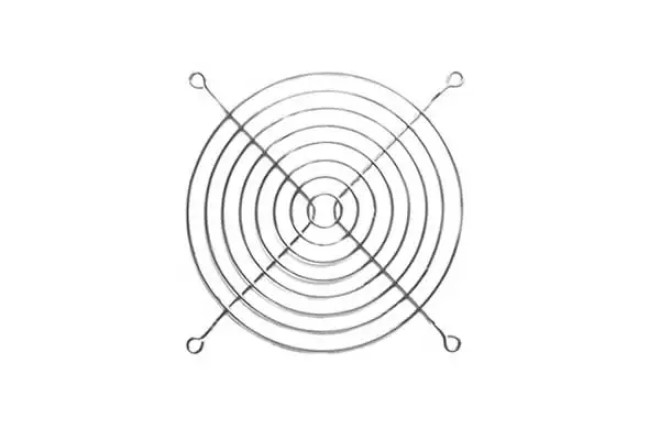
DC fans (direct current fans), with their low power consumption, flexible speed control, controllable noise levels, and high adaptability in terms of size, are widely used across various industries, including consumer electronics, industrial equipment, automotive, telecommunications, and medical applications. Their primary applications can be categorized into the following major types:
This is the most common application for DC fans, which are primarily used for cooling or ventilation in equipment to ensure stable operation.
- Computers and peripherals: Desktop CPU coolers, case fans, graphics card fans, laptop cooling pads, and server case fans. These fans support PWM speed control, allowing them to dynamically adjust their speed based on temperature.
- Smart home devices: Routers, set-top boxes, projectors, amplifiers, game consoles (e.g., console cooling fans), air purifiers, dehumidifiers, refrigerator cooling fans, and built-in fans in induction cooktops.
- Personal portable devices: Handheld fans, power bank fans, car fans, and other small portable products that rely on the low-voltage (5V/12V) operation of DC fans.
(Focusing primarily on high-reliability, high-temperature-resistant DC fans)
Industrial applications place high demands on fans in terms of durability, airflow, and resistance to high and low temperatures; they are primarily used for cooling high-power equipment.
- Industrial automation equipment: PLC control cabinets, variable frequency drives, servo drives, industrial PCs, welding machines, and laser cutters. These fans must operate reliably in a wide temperature range of -20°C to 70°C.
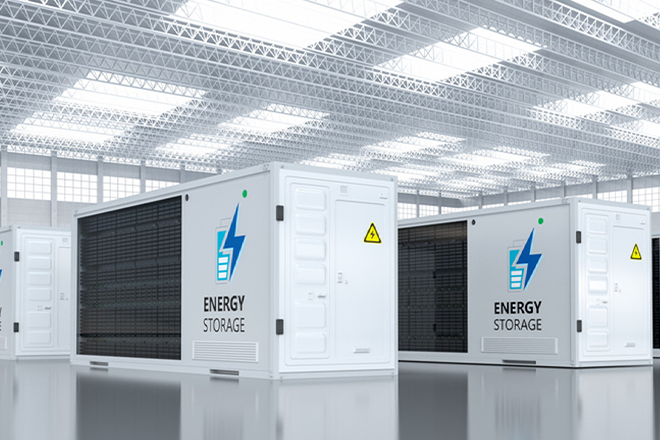
- Power equipment: Inverters, charging stations, distribution cabinets, and cooling fans for energy storage battery packs. Some require dustproof and waterproof ratings (IP54 or higher).
- Machinery: Cooling and ventilation for CNC machine tools, printing presses, and packaging machines to prevent equipment shutdowns due to overheating.
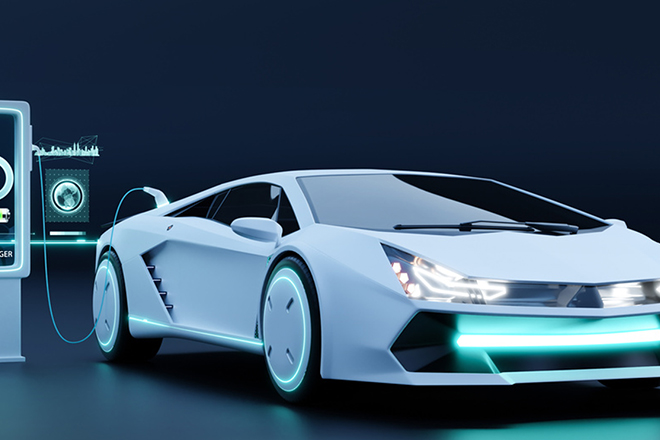
DC fans used in automobiles must meet the demands of the in-vehicle environment, including vibration resistance, low noise, and high-temperature tolerance. They are categorized into two application types: in-cabin comfort systems and powertrain systems.
- In-vehicle comfort systems: Air conditioning blower (for regulating cabin air circulation), seat ventilation fans, and cooling fans for in-vehicle refrigerators.
- Powertrain and Electronic Control Systems: Battery pack cooling fans for new energy vehicles, motor controller cooling fans, and vehicle-side fans for charging stations; radiator fans and turbocharger cooling fans for conventional fuel vehicles.
- Other Transportation Equipment: Car ventilation fans for high-speed rail and subways, and cabinet cooling fans for charging stations.
Communication equipment places extremely high demands on continuous heat dissipation, and DC fans are the core components that ensure the equipment operates 24 hours a day.
- Base station equipment: Cooling fans for the RRU (Remote Radio Unit) and BBU (Baseband Unit) of 5G base stations, which must be capable of withstanding high-temperature and high-humidity outdoor environments.
- Data centers: Cooling fans for server racks, precision air conditioners, and UPS power supplies, supporting intelligent speed control and fault warning functions.
- Network equipment: Built-in cooling fans for large-scale switches and routers.
Such environments have specific requirements regarding fan noise, cleanliness, and stability to prevent interference with equipment operation or adverse effects on the surrounding environment.
- Medical equipment: Cooling fans for ventilators, patient monitors, blood analyzers, and ultrasound diagnostic devices; some must meet medical-grade cleanliness standards.
- Security equipment: Cooling for outdoor PTZ cameras, network video recorders (NVRs), and security screening equipment.
These fans are designed for high-end applications and must meet stringent requirements for high reliability, radiation resistance, and tolerance to extreme temperatures. They are used for thermal management and environmental control in satellites, drones, radar equipment, and military communication vehicles.
Core strengths determine the scope of application
Compared to AC fans, DC fans are better suited for applications requiring low-voltage power supply, precise speed control, and quiet operation; they are particularly prevalent in battery-powered devices, compact devices, and smart temperature control devices.
 English
 português
 Español
 Deutsch
 русский