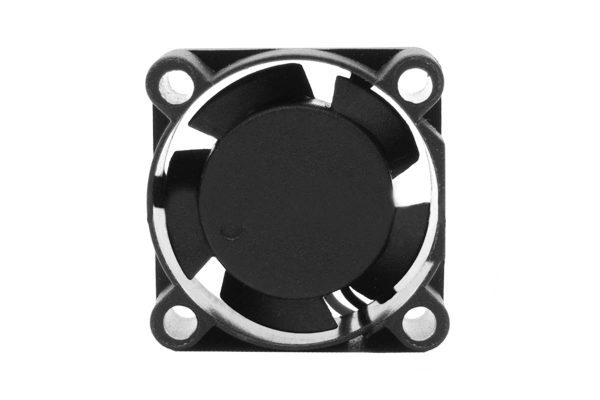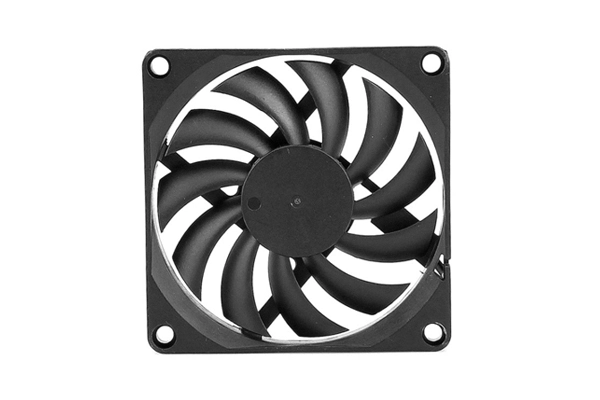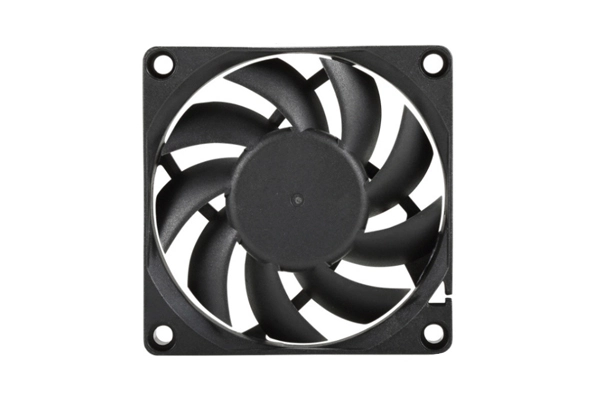
For modern equipment, "always-on" cooling at a fixed speed is often inefficient and loud. Whether it’s extending battery life in a handheld medical device or reducing the acoustic footprint of a 3D printer, precise speed control is mandatory. Understanding the interface between the DC Brushless Fan and the system controller is the first step toward a smarter, more reliable thermal strategy.
The complexity of a DC cooling fan’s wiring reflects its level of intelligence. Choosing the right interface is a balance between system cost and control precision.
2-Wire Fans (+/-): These are the simplest fans. Speed is controlled by varying the input voltage. They are reliable but offer no feedback if the fan stops.
3-Wire Fans (+/-/FG): These add a Frequency Generator (FG) signal, commonly known as a “Tachometer.” This allows the system to monitor RPM but does not provide a dedicated line for speed adjustment.
4-Wire Fans (+/-/FG/PWM): The industry gold standard. By separating the power supply from the control signal, these fans offer the widest speed range and the most stable performance.
How you choose to slow down your fan affects its mechanical lifespan and its acoustic profile.
Varying the voltage (e.g., dropping from 12V to 6V) is a low-cost control method. However, every fan has a “start-up voltage.” If the controller drops the voltage too low, the fan may stall. This “stall risk” makes voltage control less reliable for mission-critical industrial applications.
PWM control sends a high-frequency signal (typically 25kHz) to the fan’s internal driver. The fan always receives its full rated voltage, but the “Duty Cycle” of the PWM signal tells the motor how fast to spin. This allows for ultra-low RPMs without the risk of stalling and significantly reduces energy consumption at part-load.
Different applications require different levels of “thermal intelligence.” The table below outlines the trade-offs between standard power-based control and modern digital signal control.
This table compares the four most common DC fan configurations. When selecting a WELLSUNFAN model, use this guide to match the wiring to your PCB’s capabilities.
| Wiring Configuration | Signal Type | Best Application | Primary Advantage | Main Limitation |
|---|---|---|---|---|
| 2-Wire | Voltage | Simple Coolers | Lowest Cost | No failure feedback |
| 3-Wire (FG) | Tachometer | PC Cases, Lighting | Real-time RPM monitoring | No dedicated speed control |
| 3-Wire (RD) | Locked Rotor | Industrial Cabinets | Immediate “Fail” alarm | No RPM speed data |
| 4-Wire (PWM) | PWM + FG | Medical, UPS, 3D Printers | Maximum precision & efficiency | Requires PWM-ready PCB |
Strategic Engineering Note: For high-value equipment like UPS Power Supplies or Medical Ventilators, we highly recommend a 4-wire configuration. The ability to receive FG (Tachometer) pulses ensures the system knows exactly how fast the fan is spinning, while the PWM input allows for silent operation when cooling demand is low.
A smart fan is only as good as its internal PCBA. At WELLSUNFAN, we maintain full control over the electronic “brains” of our fans. Operating from our 10,000-square-meter facility in Shenzhen, our SMT Workshop is equipped with automatic printing machines, high-speed placement machines, and AOI (Automatic Optical Inspection) machines.This vertical integration allows us to:
Customize Control Logic: We can program custom PWM curves to match your specific system requirements.
Ensure Signal Integrity: Every fan is tested using noise testers and air volume testers to ensure that electrical noise does not interfere with the FG/RD signals.
Scalable Reliability: With a professional team of 300 people and a production capacity of 3 million fans per month, we ensure that every 4-wire fan—whether for a world-renowned enterprise or a specialized medical OEM—is built with high-precision balancing and reliable equipment.
By adhering to “Customer First, Quality Foremost,” we ensure that our smart fans don’t just spin; they integrate seamlessly into your digital control ecosystem.
Implementing PWM and FG signals is the most effective way to protect your hardware, reduce energy costs, and improve the user experience. By selecting the right control logic, you move from simple “cooling” to “intelligent thermal management.”
WELLSUNFAN provides detailed wiring diagrams, signal specifications, and R&D support for all our DC brushless fan models.
Established: 2011 in Shenzhen.
R&D Strength: 20+ expert engineers.
Global Reach: Trusted by partners in the US, UK, France, and Russia.
Request a Technical Specification for PWM-Controlled Fans from WELLSUNFAN.


 English
 português
 Español
 Deutsch
 русский